CEREC Same-Day Crowns
Dental crowns (caps): allowing you to keep your teeth for longer!
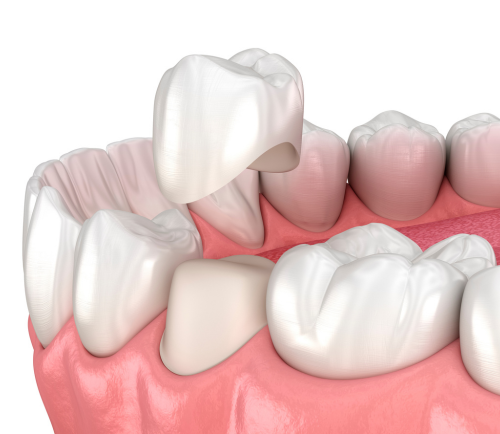
Dental crowns can protect, camouflage, cover or strengthen your tooth, allowing you to keep your tooth for longer.
Dental crowns are also known as tooth crowns, porcelain crowns or dental caps – and they work a little bit like caps. Dental crowns cover your tooth, providing multiple benefits, depending on your needs. Today, crowns are incredibly lifelike and almost impossible to detect from your natural teeth.
Do I need a porcelain crown?
At our Wodonga dentist clinic, dental crowns are created in various materials, depending on the patient’s needs and budget. We can use porcelain, metal, porcelain fused to metal or gold. The most lifelike dental crowns are porcelain crowns, so if you need a crown on a tooth that’s visible when you smile and talk, a porcelain crown may be the best solution for you.
No more invasive impressions!
Unlike some clinics, taking an impression for your new crown is easy. There’s no powder, no putty and no invasive (and time-consuming) impressions in your mouth.
At SJ Dental, we use one of the newest scanners from Dentsply Sirona, the global leaders in dental equipment. This tiny wand-like device is gently placed in your mouth for a few seconds, creating an incredibly accurate 3D image of your teeth and gums on a nearby computer screen.
It’s quick, easy and fuss-free!
The Versatile Dental Crown
Dental crowns are highly versatile. They can:
Reinforce a weak, badly cracked tooth
If you have a badly cracked tooth, it won’t improve on its own and over time, the situation can worsen. For example, you may start to feel sensitivity when biting into foods or your dentist may have told you that you risk your tooth splitting apart. To remedy this situation, your dentist may recommend a dental crown to hold your severely cracked tooth in place.
Be part of a dental bridge
if a tooth-supported bridge is being created, meaning a dental bridge that doesn’t involve tooth implants, your dentist will need to grind down the neighbouring teeth of the bridged area and place a new dental cap on the top to work as an abutment for the bridge.
Restore a broken tooth or tooth that has been badly worn down
A tooth that has been badly worn down can become more transparent or even darker. Sometimes, your dentist will recommend a crown to strengthen and protect the tooth and also to match the colour of your neighbouring teeth.
Replace a large
fillings don’t always last forever. If you have an old, large filling that perhaps has already been replaced a couple of times, your dentist may suggest the more permanent option of a dental crown.
Act as an artificial tooth on top of a dental implant
If you have lost an adult tooth and are replacing it with a dental implant, a dental crown will be attached to the implant via an abutment, working as a permanent replacement tooth.
Cover an unattractive tooth due to multiple fillings, stains
A tooth can begin to look unsightly due to, for example, several mercury amalgam fillings or bad staining. A porcelain crown can aesthetically remedy this situation.
Cover a badly shaped tooth
Dental crowns, particularly porcelain crowns, can be used for aesthetic reasons.
All surgical procedures carry risks. Before proceeding, you should seek a second opinion from an appropriately qualified health practitioner.
Dental Crowns FAQs
What is a dental crown?
Why would I need a dental crown?
How long do dental crowns last?
Do crowns look natural?
Is getting a crown painful?
How do I care for a dental crown?
Book An Appointment
Our Preferred Providers
SJ Dental is a preferred provider for NIB.